Deck railing decisions come down to three things fighting each other: How much view you want to keep, how much upkeep you’re willing to do, and what you’re willing to spend. No single style wins on all three, which is why there are nine different answers below instead of one.
“Outdoor living shouldn’t require millionaire status.”
Dylan Halverson, Island Deck and Rail LLC founder
Before You Pick a Style: Three Things to Know

- View priority. Cable and frameless glass open up a view the most. Pickets and framed styles trade some of that view for a lower price or a more traditional look.
- Maintenance tolerance. Aluminum asks the least of you. Cable asks for a periodic tension check. Glass asks for regular wiping. Wood asks for real seasonal upkeep.
- Budget and exposure. Coastal salt air rewards marine-grade materials, and that grade of material tends to cost more up front in exchange for costing less in repairs later.
9 Modern Deck Railing Ideas
These nine cover the types of deck railing homeowners in this region ask about most, from the most open-view options to the ones built for a tighter budget. That includes horizontal deck railing, composite deck railing, and deck stair railing, not just the standard picket-and-cable comparison. Think of this as the full menu of deck railing options before narrowing down to one.
1. Stainless Cable Railing (Coastal Cable / Similar)
Photo placeholder: Stainless cable railing on a coastal deck, showing hidden fasteners and an open view.
What it is: horizontal stainless steel cables strung between posts, with no pickets or panels breaking up the view.
Materials: marine-grade stainless steel cable, paired with aluminum, wood, or composite posts. Posts here are commonly sourced through Coastal Cable, a family-run supplier that keeps material costs closer to wholesale than retail.
Pros: the most open sightline of any solid-post system, a clean modern look, works with almost any post material.
Cons: cables need a periodic tension check, and installation precision matters more than with a picket system.
Who it’s for: homeowners whose deck exists mainly for the view.
PNW climate fit: marine-grade stainless resists salt spray and coastal humidity well when properly specified.
Code notes: openings must stay small enough that a 4-inch sphere cannot pass through, and cables can loosen slightly over time, so tension gets checked at the same time.
2. Excell Precision Cable System
Photo placeholder: Close-up of Excell precision cable hardware and slim post detail.
What it is: a premium cable hardware system built around hidden fasteners, slim posts, and precise tensioning, rather than a standard off-the-shelf cable kit.
Materials: high-grade stainless cable paired with engineered tensioning hardware and powder-coated aluminum posts.
Pros: tighter tolerances and longer-term tension stability than a standard market kit, and a cleaner sightline as a result.
Cons: costs more than a standard stainless cable system.
Who it’s for: homeowners who want the cleanest possible cable look and are comfortable paying for hardware quality.
PNW climate fit: built for coastal humidity and salt exposure, same as standard cable, with tighter tensioning tolerances over time.
Code notes: the same 4-inch sphere rule applies, and the precision tensioning hardware is specifically built to hold that spacing longer between checks.
3. Frameless Glass Panel Railing
Photo placeholder: Frameless glass panel railing with an unobstructed water or tree-line view.
What it is: glass panels held by base-shoe or standoff hardware, with no top or side frame breaking up the view.
Materials: tempered glass panels, corrosion-resistant base hardware.
Pros: the clearest sightline of any railing style, a sleek contemporary look.
Cons: shows water spots and fingerprints more visibly than metal or cable, and carries a higher price tag.
Who it’s for: homeowners who want maximum view and don’t mind wiping panels down more often.
PNW climate fit: needs corrosion-resistant hardware for coastal exposure, and panels near salt spray or trees need more frequent cleaning.
Code notes: glass thickness and guard requirements vary by jurisdiction and deck height, so confirm before ordering panels.
4. Framed Glass Panel Railing
Photo placeholder: Framed glass panel railing showing the top rail and post structure.
What it is: glass panels set within a top rail or side posts, adding visible structure that frameless glass doesn’t have.
Materials: tempered glass paired with aluminum or wood framing.
Pros: more structural support than frameless, and often a lower price than a fully frameless system.
Cons: the frame lines interrupt the view somewhat compared to frameless glass.
Who it’s for: homeowners who want glass clarity with a bit more visual structure underneath it.
PNW climate fit: same cleaning needs as frameless glass; framing hardware should be corrosion-resistant for coastal exposure.
Code notes: same jurisdiction-dependent glass thickness and height rules apply as frameless glass.
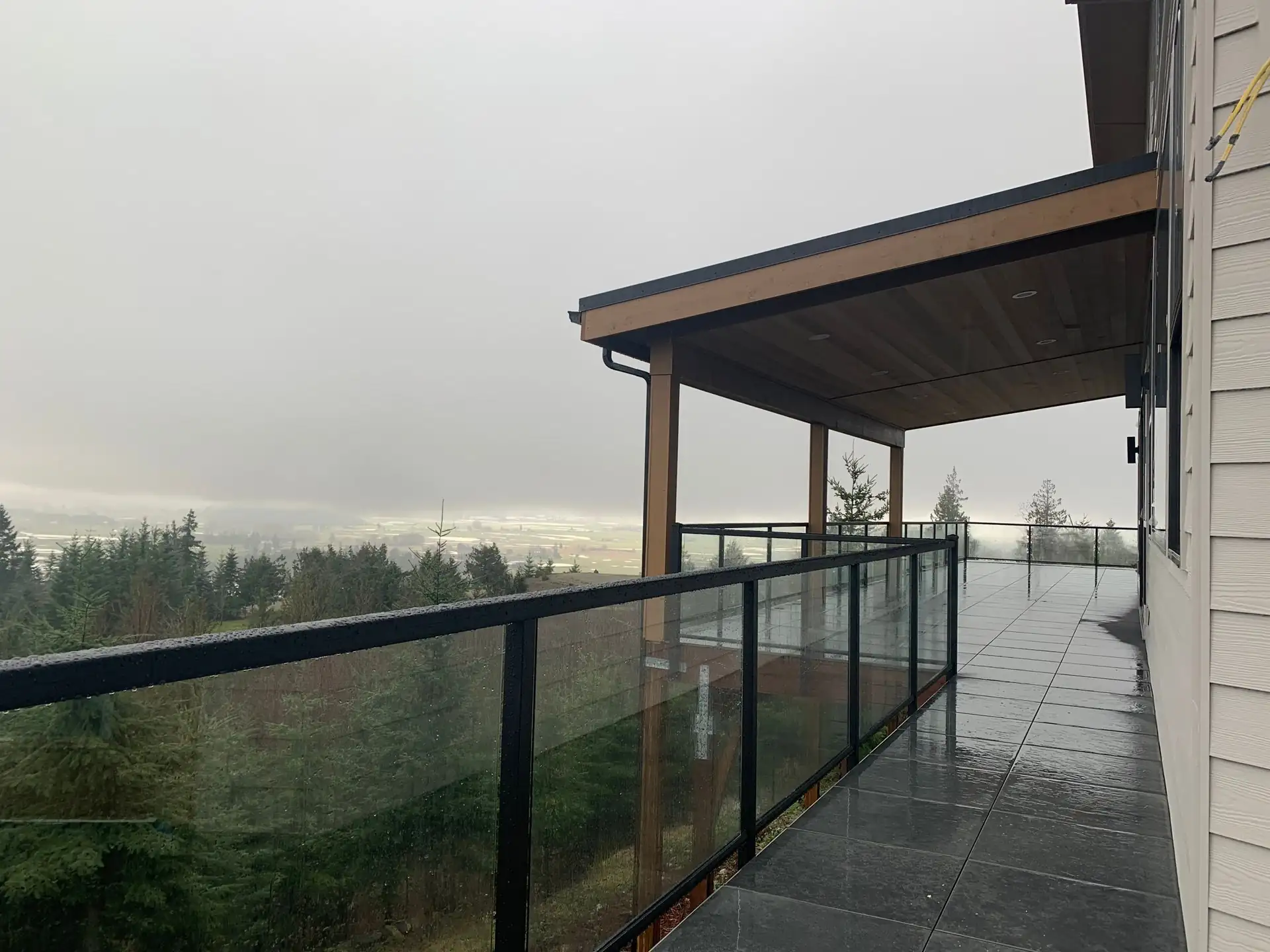
5. Aluminum Picket Railing (Powder-Coated)
Photo placeholder: Powder-coated aluminum picket railing in matte black or bronze finish.
What it is: vertical aluminum pickets set in a top and bottom rail, the classic railing profile built in a low-maintenance metal.
Materials: powder-coated aluminum, with posts commonly sourced through the same Coastal Cable partnership as the cable system.
Pros: the lowest price of the modern options here, minimal upkeep, and a wide range of finish colors including matte black, bronze, and warm white.
Cons: blocks more of the view than cable or glass.
Who it’s for: budget-focused homeowners, or anyone replacing an old wood picket railing with something that needs far less attention.
PNW climate fit: powder coating resists coastal humidity and salt air well over time.
Code notes: picket spacing needs to meet the 4-inch sphere rule, which is usually straightforward since pickets are typically spaced tighter than that already.
6. Horizontal Aluminum Bar Railing
Photo placeholder: Horizontal aluminum bar railing on a modern deck.
What it is: aluminum bars run horizontally between posts instead of vertical pickets, for a cleaner, more modern line.
Materials: powder-coated aluminum.
Pros: a more contemporary look than vertical picket, with the same low-maintenance finish.
Cons: horizontal rails can be more climbable than vertical pickets, which matters if young children use the deck; confirm this with your local code, since some jurisdictions apply extra scrutiny to horizontal designs.
Who it’s for: homeowners chasing a modern look who don’t have young climbers to plan around.
PNW climate fit: same powder-coat resistance as picket railing.
Code notes: spacing still needs to meet the 4-inch sphere rule; ask your installer directly about the climbability question for your household.
7. Composite Top Rail with Cable Infill
Photo placeholder: Composite top rail with cable infill paired with a matching composite deck surface.
What it is: a solid composite cap rail with cable strung underneath as the infill, combining a substantial handrail feel with an open view below it.
Materials: composite capping material paired with stainless cable infill; composite decking brands like Deckorators are a natural material match for the cap.
Pros: a solid, low-paint top rail without fully blocking the view, and a natural pairing with a composite deck surface.
Cons: seams and joints on the composite cap can collect debris and need occasional cleaning.
Who it’s for: homeowners with a composite deck who want a substantial top rail without losing the whole view.
PNW climate fit: composite resists moisture well, a solid match for a wet coastal climate.
Code notes: the cable infill underneath still needs to meet standard spacing and tensioning requirements even with a solid cap on top.
8. Wood Top Rail with Cable Infill
Photo placeholder: Cedar top rail with cable infill showing the natural wood grain.
What it is: a natural wood cap rail, often cedar, with cable infill underneath.
Materials: wood cap paired with stainless cable.
Pros: warmth and a natural material at hand height, and a surface that can be sanded and refinished rather than replaced.
Cons: the most maintenance-intensive option on this list in a wet PNW climate; needs sealing and periodic refinishing to hold up.
Who it’s for: homeowners who want real wood at hand height and are willing to maintain it.
PNW climate fit: wood is the option most sensitive to Pacific Northwest rain, so plan on a real upkeep schedule if you choose it.
Code notes: the cable infill underneath carries the same spacing and tensioning rules as any other cable system.
9. Cable Railing on Stairs (Continuous Run)
Photo placeholder: Continuous cable railing running from deck level down a stair section.
What it is: cable railing continued down a stair run instead of switching to a different system at the stairs.
Materials: the same stainless cable and hardware used at deck level, adapted to the stair angle.
Pros: visual continuity from the deck surface down to the ground, keeping the view open the whole way.
Cons: stair transitions need secure end-post anchoring, and wide flat top rails often don’t meet stair handrail graspability rules, so a separate graspable rail may be needed alongside the cable run.
Who it’s for: homeowners who want one consistent look from deck to stairs rather than a visible switch in style.
PNW climate fit: same marine-grade resistance as deck-level cable.
Code notes: stairs carry different handrail height and graspability requirements than a level guard, and this is one of the more common inspection failures when a decorative top rail is used without a separate graspable handrail.
Which Style Is Best for Your Deck?
- Maximum view preservation: cable.
- Sleek modern look plus maximum view: frameless glass.
- Traditional or craftsman feel: composite or wood top rail with cable infill.
- Lowest maintenance: aluminum picket, with cable a close second if an occasional tension check doesn’t bother you.
- Toddlers or pets on the deck: review code carefully either way; cable stays compliant when spaced and tensioned correctly, and aluminum picket removes the climbability question entirely.
- Tightest budget: aluminum picket.
- Highest-end finish: the Excell precision cable system or frameless glass.
Materials That Hold Up in Coastal PNW Conditions
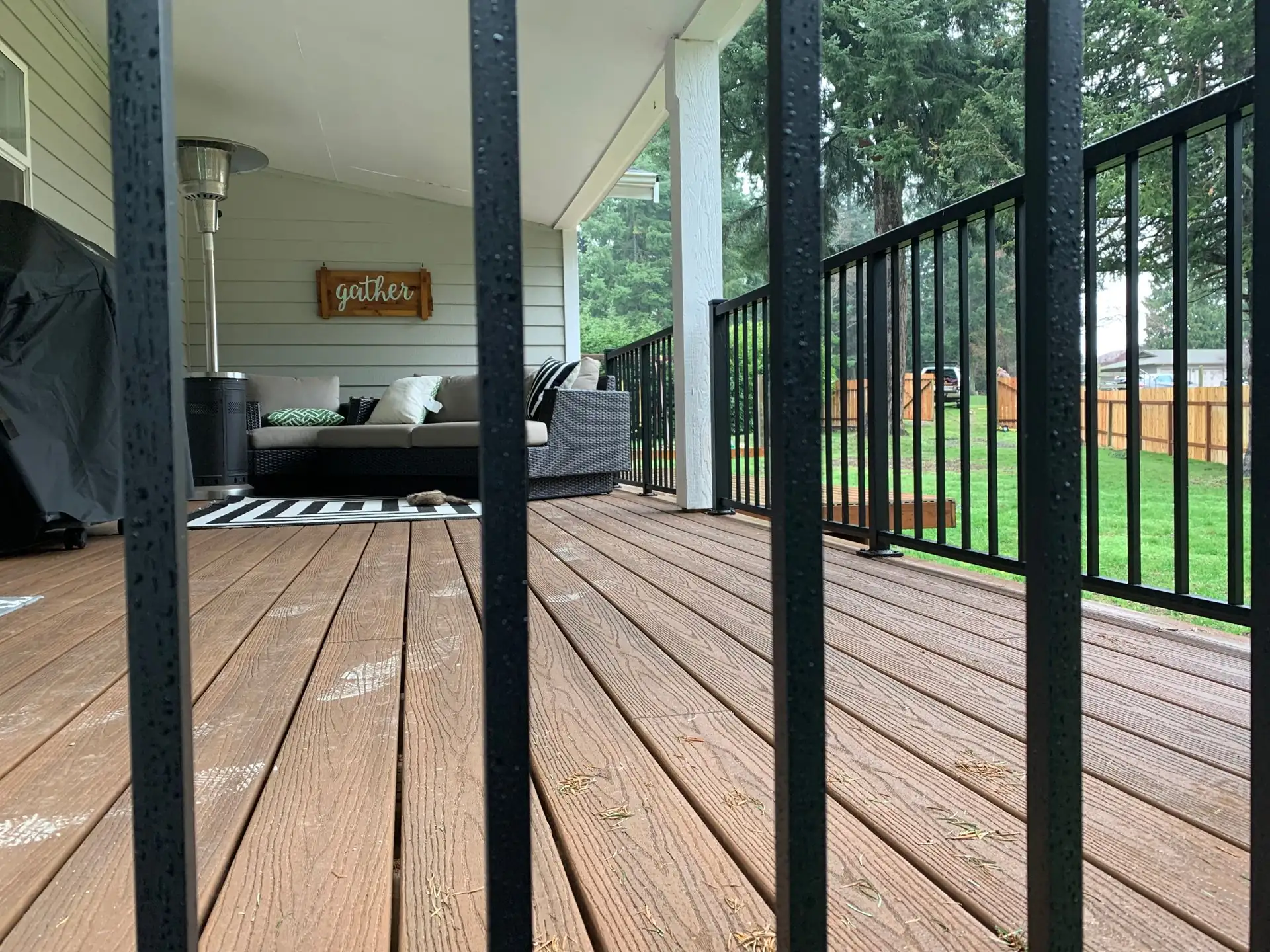
Cable deck railing, aluminum deck railing, and glass deck railing all handle salt air differently, and the difference shows up in upkeep more than in structural failure. Beyond what’s already noted style by style above, two comparisons are worth making directly.
Powder-coated aluminum versus raw aluminum is a real difference, not a marketing distinction. Raw aluminum oxidizes and dulls faster in a wet coastal climate, while a baked-on powder finish resists chipping, fading, and rust for years. If a quote doesn’t specify which one you’re getting, ask.
Marine-grade stainless versus standard stainless matters more than most buyers realize, since these grades often get sold as “stainless” without naming the grade at all. Higher marine grades cost more up front and hold up longer against salt spray; lower grades can show surface staining within a few seasons in a coastal spot. This is the single question worth asking before comparing prices between installers.
Deck Railing Code Basics
Every style above still has to meet the same core deck railing requirements before it’s considered code-compliant, regardless of how it looks.
- Height requirements. Homeowners often ask how high deck railing should be, and the honest answer runs through the deck railing height code for your specific site. Washington’s building code requires a guard once a deck sits 30 inches or more above grade, and that guard must stand at least 36 inches tall for a residential deck. Confirm the specific requirement for your site with your local building department.
- Baluster spacing. Openings need to stay small enough that a 4-inch sphere cannot pass through, whether the infill is pickets, bars, or cable.
- Cable tensioning code. Cable can meet spacing requirements at installation and open up slightly as cables stretch over time, which is why correct initial tensioning and periodic checks matter more for cable than for aluminum or glass.
- Stair railing differences. Wide, flat top rails common on composite and many railing systems often don’t meet graspability requirements for a stair handrail. If the top rail profile doesn’t qualify, a separate graspable handrail needs to run alongside it on the stairs specifically.
How to Match a Railing to Your Deck Material
Composite deck plus cable railing is one of the more natural pairings here. Cable stays low-maintenance and keeps the composite surface visible instead of boxing it in.
Composite deck plus glass works well when the view is the priority and the composite surface underneath is doing the heavy lifting on maintenance, since glass alone already asks for more upkeep than most homeowners want to add on top of a high-maintenance deck surface too.
Wood deck plus aluminum picket is a common upgrade path: The deck surface keeps its natural material, while the railing switches to something that doesn’t need the same seasonal attention as the boards underneath it.
Multi-level decks and visual continuity come down to one rule: Pick one railing system and carry it through every level and every stair transition. Switching styles between levels reads as unfinished rather than intentional, even when each individual system is installed correctly.
Deck Railing Ideas FAQs
What is the most popular deck railing right now?
Cable and aluminum are the most common choices for homeowners who want a modern look with an open view and manageable upkeep. Popularity shouldn’t replace fit, since the right choice still depends on your view, budget, and maintenance tolerance.
Is cable railing safe for kids?
Yes, when it’s spaced and tensioned to meet the 4-inch sphere rule required by code. Because cables can loosen slightly over time, a periodic tension check matters more for households with young climbers. If climbability is still a concern, aluminum picket or a tighter composite infill removes the question entirely.
Will cable railing rust in salt air?
High-grade marine stainless resists rust well in salt air. Lower-grade stainless can show surface staining sooner in a coastal environment, so ask which grade is being quoted before comparing prices between installers.
How much does each railing style cost?
Cost depends on total length, corners, stair sections, post layout, and material grade. See the cost ranges below for a general sense of where each style typically lands, then get a project-specific estimate for your deck.
What deck railing requires the least maintenance?
Aluminum, whether picket or horizontal bar. It needs only an occasional rinse and has no cables to tension or glass to wipe down.
Can I mix railing styles on one deck?
Yes, homeowners sometimes combine styles, such as one treatment on stairs and another near a seating area. The transition works best when post locations, top rail heights, and finish colors coordinate across the deck.
How high does deck railing need to be?
In Washington, a guard is required once a deck sits 30 inches or more above grade, and that guard must be at least 36 inches tall for a residential deck. Confirm the exact requirement for your site with your local building department.
Does cable railing block the wind?
No. Cable railing does not function as a wind screen, since air passes freely between the cables. It keeps the deck edge open rather than blocking it, so homeowners who need wind protection should plan a separate screening solution.
What Modern Railing Costs (Quick Ranges)
These are general 2026 national installed-cost ranges, not a quote from any specific company. Actual pricing depends on total length, post material, stair sections, and site access, so treat this as a starting point for comparison, not a final number.
| Style | Typical Installed Cost (per linear foot) |
|---|---|
| Aluminum picket or horizontal bar | $50 to $200 |
| Standard stainless cable railing | $85 to $250 |
| Excell or other precision cable systems | Runs toward the higher end of the cable range, reflecting the hardware |
| Framed or frameless glass | $150 to $500 |
| Composite top rail with cable infill | Cable pricing plus the composite cap material |
| Wood top rail with cable infill | Cable pricing plus the wood cap material and ongoing refinishing costs |
Ready to Upgrade the View?
Every installation from this crew is backed by a 1-year labor and installation warranty, and posts for the cable and aluminum systems come through the family-run Coastal Cable supply chain, keeping material costs closer to wholesale than retail. Financing is in early stages through Improveifi, so ask about current availability during your consultation.
Comparing styles across Skagit, Island, or Whatcom County, or the San Juan Islands? Confirm coverage for your area first. Site visits and estimates on Lopez, Orcas, or San Juan Island carry a $300 fee plus an $86 ferry fee.
Want to see any of these nine styles on a finished deck first? Browse the project gallery or the full project list.
Ready to talk through which of these nine styles fits your deck? Schedule a consultation today!