Skim the key points below if you want the short version before planning a quote.
Cable railing cost in Island County depends on railing length, layout, materials, site access, stair runs, post spacing, and the work needed to fasten the railing safely to the deck. A clean, straight run on a level deck is a very different project from a bluff-side deck with stairs, corners, landings, and weathered framing. An accurate estimate should explain what is included, what is excluded, and why the price moves up or down.
Cable railing can preserve a shoreline, forest, garden, or water view, but it is not automatically the cheapest railing choice. Homeowners usually choose it for a lighter visual profile, precise hardware, and a finished edge that doesn’t feel like a wall around the deck.
Island County homeowners often compare cable railing cost against the view they are trying to protect. That matters on Whidbey Island, Camano Island, Oak Harbor, Coupeville, Langley, Freeland, Clinton, and Greenbank, where the deck is often the place where the property finally opens up.
Island Deck and Rail LLC is the company named in this guide, and an accurate estimate needs project details rather than a generic per-foot promise. If you want to compare railing options first, you may also find this comparison of cable vs. glass, wood, and aluminum railing helpful.
Cable Railing Cost Snapshot
1. Measure the run: Count every level section, stair section, landing, and return.
2. Count the complexity: Corners, stairs, post layout, and height requirements affect labor and parts.
3. Choose the system: Excel, Coastal Cable components, glass, aluminum, and hybrid systems price differently.
4. Check the deck: Old framing, weak attachment points, or hidden rot can change the scope before railing begins.
5. Compare the quote: The best estimate explains the whole project, not just a number per linear foot.
What Determines Cable Railing Cost in Island County?
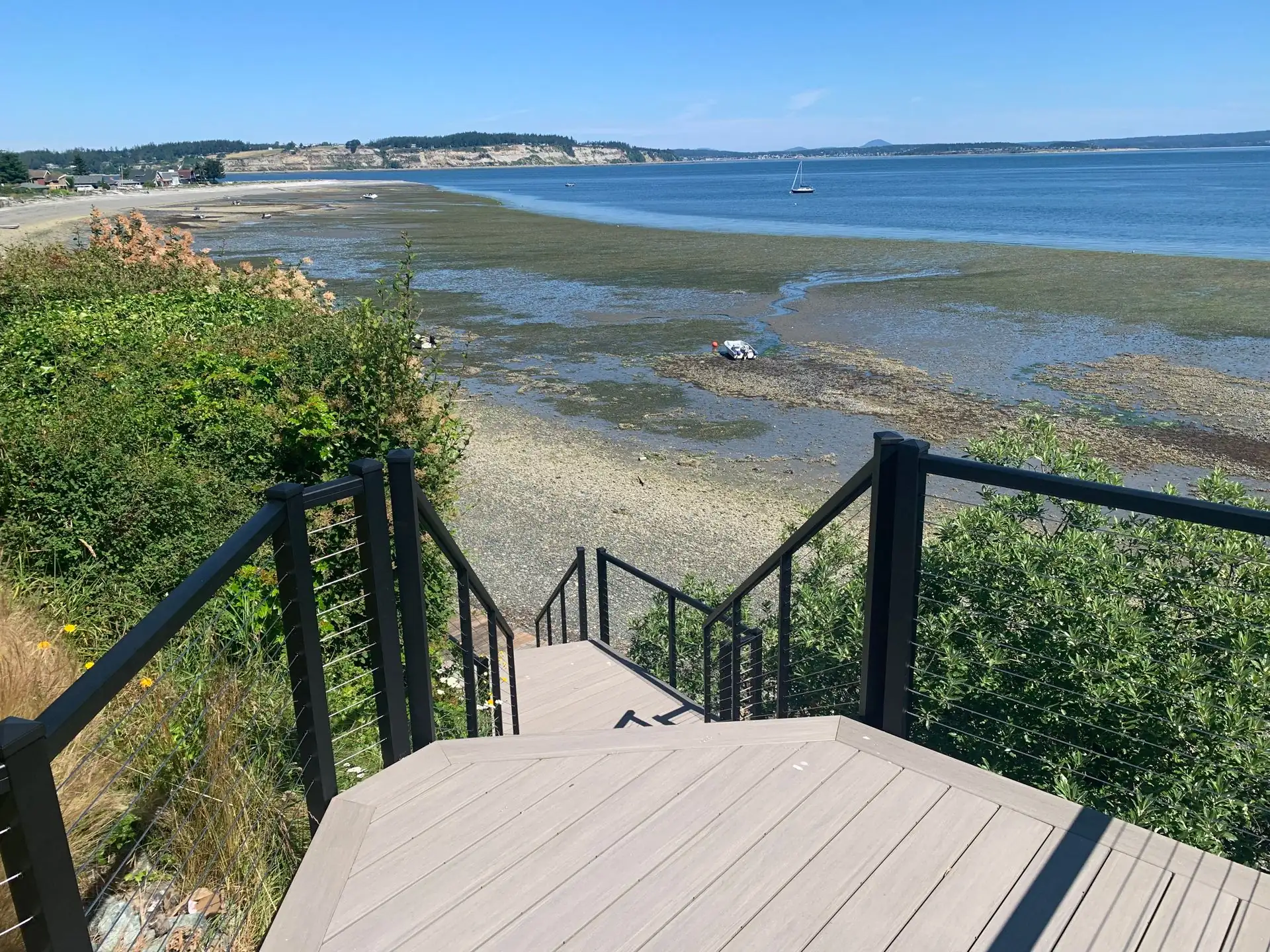
Cable railing cost depends on the full installation scope, not just the number of feet around the deck. The most useful comparison is between estimates that describe the same layout, materials, code assumptions, and preparation work.
| Cost Driver | Why It Changes the Price | What to Ask Before You Compare Quotes |
|---|---|---|
| Linear feet | Longer railing runs need more posts, cable, hardware, top rail, and labor. | Does the measurement include stairs, returns, landings, and every exposed deck edge? |
| Corners | Corners require more layout time, hardware planning, and decisions about cable termination. | How many corners are included, and how will the cable be tensioned around them? |
| Stairs | Stair railing takes more precision because the cable angle, post placement, and handrail path must work together. | Are stair runs priced separately from level deck railing? |
| Top rail material | Wood, composite, aluminum, and hardwood caps each change the look, upkeep, and material cost. | What top rail is included, and what changes if I choose a different cap? |
| Existing deck condition | Weak framing, soft blocking, or poor attachment points can require additional prep work before railing installation. | Will the existing deck be reviewed before the final cost for cable railing is confirmed? |
| Access and exposure | Steep lots, waterfront access, ferry logistics, and difficult staging can affect labor planning. | Does the estimate include travel, staging, and site access conditions? |
- Railing Length: A longer run usually requires more railing components and labor, so total length matters. Ask whether the measurement includes every deck edge and stair section that needs protection, since a partial measurement can make a quote appear lower than the complete project will be.
- Corners and Stairs: Turns and stair transitions add layout work beyond a straight section. Stair runs may need different measurements and connection details, so ask whether the estimate accounts for each run, landing, corner, and transition.
- Material Choices: Posts, infill, and the top rail can vary by material and finish, affecting both the quote and the final look. Ask the installer to identify the proposed components in writing, including available options, so you can compare like with like.
- Existing Conditions: A replacement project may require more work if the current deck or its connection points cannot support the planned railing as-is. The installer may need to assess access, attachment locations, and the supporting structure before confirming scope.
A per-foot price can help with early budgeting, but it does not show the full scope. Ask how each quote treats stairs, corners, material selections, removal of existing railing, and work needed before installation.
Pro Tip: If one estimate is much lower than the others, ask what is missing before assuming it is a better deal. Removal, blocking, stairs, hardware, top rail selection, and site access can all hide outside the first number.
How Does Cable Railing Compare With Other Deck Railing Options?
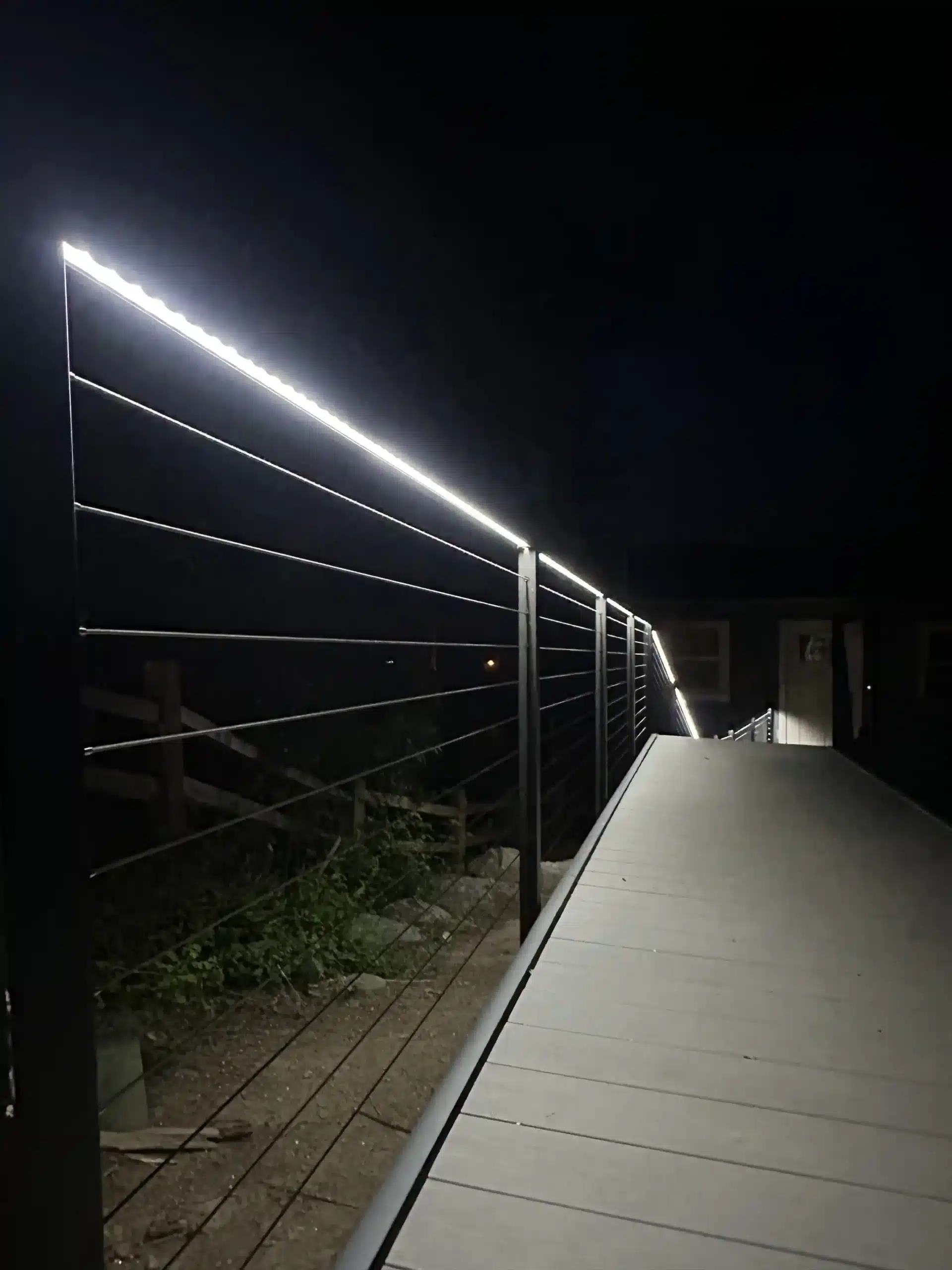
Cable railing is worth comparing when sightlines matter, but the best choice depends on budget, maintenance preferences, and the deck’s design. A cable deck railing may offer a more open view than a more solid-looking option, but weigh that benefit against the complete project cost.
For context, the 2025 Houzz U.S. Renovation Trends Study reported that the median renovation spend remained significant for homeowners, with many owners continuing to invest in spaces that improve daily use and long-term enjoyment. That does not set the cost of your railing, but it explains why many homeowners treat railing as part of a larger outdoor investment rather than a small finishing detail.
| Railing Type | Typical 2026 Installed Pricing Range | Best Fit | Main Tradeoff |
|---|---|---|---|
| Aluminum picket or horizontal bar | $50 to $200 per linear foot | Homeowners who want a clean, defined perimeter with lower upkeep. | More visual interruption than cable or glass. |
| Standard stainless cable railing | $85 to $250 per linear foot | Open views, modern lines, and coastal or wooded settings. | Needs correct tensioning and periodic checks. |
| Excell or other precision cable systems | Often toward the higher end of cable ranges | Projects where fit, finish, and hardware consistency matter. | Higher product cost than basic kits. |
| Framed or frameless glass | $150 to $500 per linear foot | Broad water, bluff, or forest views where the clearest panel effect is desired. | Shows water spots, fingerprints, and glare more easily and needs more frequent cleaning. |
| Wood railing | Varies widely by design and finish | Traditional homes, warm texture, and a heavier framed look. | More seasonal maintenance in damp Pacific Northwest weather. |
These are planning ranges, not a quote. Your actual cable deck railing cost depends on layout, system selection, stairs, access, and whether the existing deck is ready for new railing.
- View and Visibility: Cable infill can leave more of the view visible than closely spaced solid surfaces, which may matter on a deck facing water, trees, or open land. The effect depends on deck height, surrounding landscape, post layout, and how the railing looks from inside the home.
- Alternative Materials: Wood, metal pickets, glass, and cable each have different installation requirements and maintenance needs. Wood suits a traditional exterior, while glass or cable may appeal to people who want maximum visibility.
- Ownership Costs: The first quote does not include every future task, such as cleaning, finish care, or checking components. Ask what care the selected materials need, then compare that routine with how much maintenance you actually want to take on.
- Comparable Quotes: A useful cable deck railing cost comparison lists the same railing length, stairs, materials, and installation scope for each option. Ask each contractor to describe exclusions and site preparation separately, since different assumptions can make a lower quote look better than it is.
A 2025 Cost vs. Value report from Zonda listed deck additions among the exterior improvements homeowners often evaluate for both use and resale, with wood and composite deck additions continuing to recoup a meaningful share of cost nationally. That does not mean every railing has a guaranteed resale return, but it does show why many homeowners treat deck and railing decisions as both lifestyle choices and long-term property decisions.
Those same scope details matter when comparing deck railing installation costs. A written estimate that spells out what is included can reveal why two railing options or contractor quotes differ.
Pro Tip: Stand where you sit, not just where you stand, when judging the view. A rail that feels invisible from the yard may still cross your eye line when you are seated at the table or looking out from the living room.
What Should You Confirm Before Hiring for Cable Railing Installation?
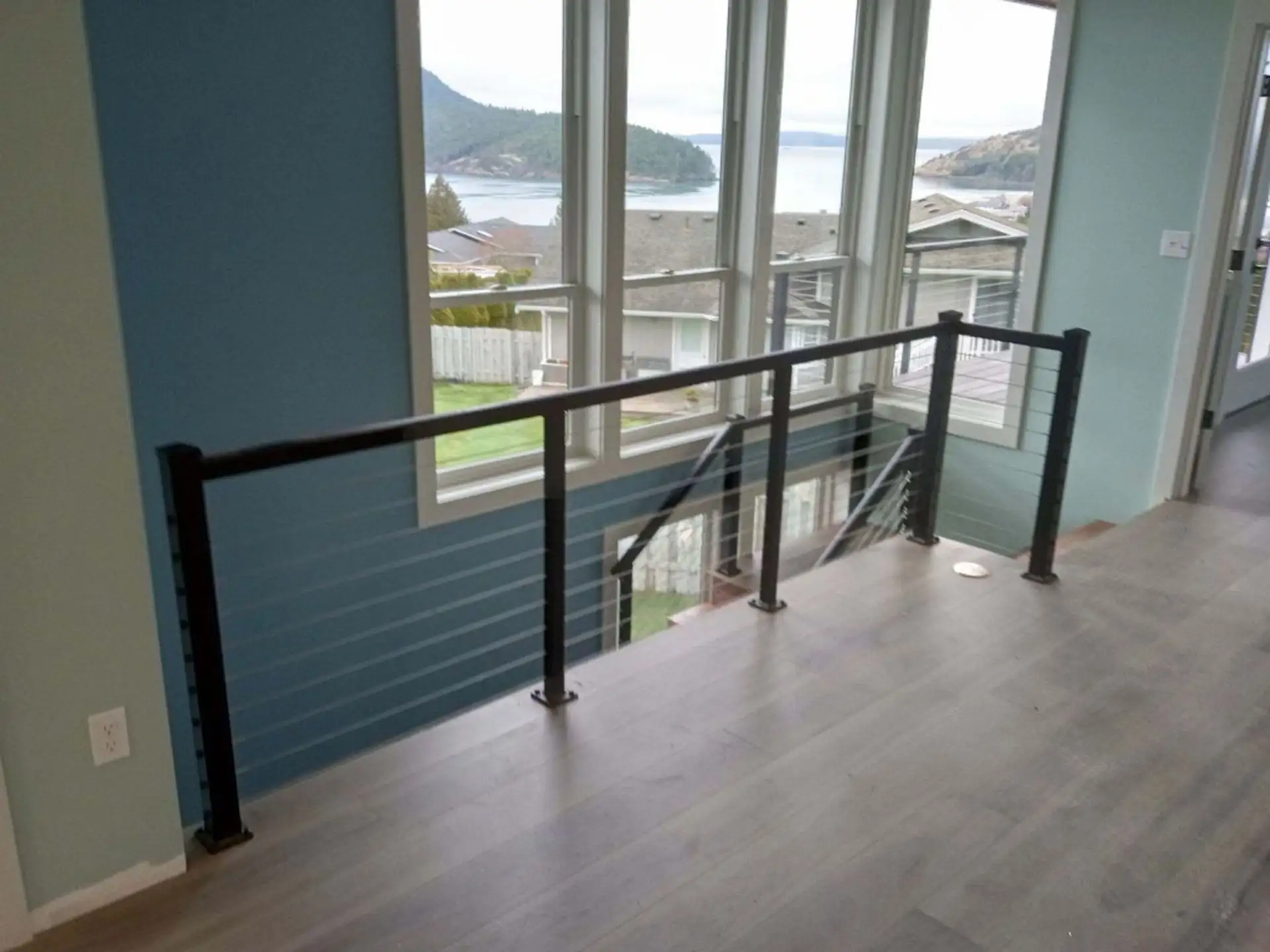
Before cable railing installation begins, confirm that the proposed layout fits the deck, meets applicable safety rules, matches the selected product system, and complies with any local permit requirements. Clear answers help prevent a beautiful railing choice from getting ahead of the structure underneath it.
- Local Requirements: Building rules can depend on the project, the property, and the authority reviewing the work. Ask what requirements apply to your specific deck and verify permit questions with the relevant local building department.
- Safety Details: Railing height, openings, stair sections, and how components are secured can all affect whether a proposed design is appropriate. Do not rely on a general online rule as approval for a particular property.
- Scope in Writing: A clear proposal should identify the areas being replaced or added, the specified materials, and the work included. Ask who handles removal, preparation, and disposal if those tasks apply.
- Installer Questions: Search results for cable railing installers near me can provide names, but homeowners still need to compare experience and communication. Ask how the installer will address corners, stairs, tensioning, post layout, and final inspection of the work.
Product selection also matters. Island Deck and Rail LLC commonly uses Excell Railing Systems and Coastal Cable components when appropriate, with final selection based on design, availability, manufacturer specifications, and site conditions. For a broader overview of deck railing installation services, visit the deck railing installation service page.
Pro Tip: Ask for the product system by name. “Cable railing” is a category, not a specification, and a generic kit is not the same conversation as a planned system with defined posts, cable, hardware, and top rail details.
For homeowners comparing real projects, the Anacortes cable railing with mahogany top rail shows how Excell posts, Coastal Cable stainless steel cable, and a wood top rail can work together. The La Conner multi-deck reconstruction shows cable railing as part of a much larger deck investment where rot repair, decking, framing protection, and railing all affected the final scope.
Cable Railing Cost FAQs
How much does cable railing cost per linear foot in Island County?
For early planning, many 2026 cable railing projects fall somewhere in the broad range of $85 to $250 per linear foot, with precision systems often landing toward the higher end. Your actual price can move outside that range based on stairs, corners, deck height, access, top rail material, and whether the existing deck needs preparation before the railing can be installed.
Why is Excell cable railing more expensive than generic cable kits?
Excell and similar precision systems usually cost more because the posts, hardware, finishes, and installation details are designed as a coordinated system. Generic kits may look cheaper at first, but they can shift more responsibility to the installer and homeowner if the parts, post spacing, tensioning method, or finish quality don’t match the deck.
Will cable railing rust in Pacific Northwest salt air?
Quality stainless cable and properly finished metal components are selected because they handle coastal exposure better than many basic materials. No exterior railing is maintenance-free, so ask which stainless grade, post finish, and hardware package are being quoted, then follow the manufacturer’s cleaning guidance for salt air.
Is cable railing code-compliant for stairs?
Cable railing can be code-compliant on stairs when the system is designed and installed for the stair angle, required height, opening limits, graspable rail needs, and local requirements. The key point is that stair railing isn’t just level railing tilted on a slope, so it should be measured and planned as its own part of the project.
Can I retrofit cable railing onto my existing wood deck?
Often, yes, but the existing deck has to be reviewed first. The installer needs to check framing, blocking, post attachment points, stairs, rot, and overall stability before confirming that a cable railing retrofit is a good idea.
Does cable railing block the view?
Cable railing does not disappear, but it usually creates a lighter visual profile than wood pickets or heavier framed systems. Posts, top rail material, cable spacing, and where you sit on the deck all affect how open the view feels, so judge the design from your real living and seating areas before choosing.
Cable Railing Cost: A Quote Guide from Island Deck and Rail LLC
Cable railing cost is best judged against a clear scope, a suitable system, and your deck details rather than an unsupported per-foot promise. If you are considering cable railing installation, contact Island Deck and Rail LLC to request an estimate based on your project.
Share the railing layout, stair locations, preferred materials, photos, access notes, and known deck concerns. If you are in Oak Harbor, Camano Island, or nearby service areas, you can also confirm coverage through the areas served page. To see finished work before you decide, browse the project gallery or the full project list.
Ready for a project-specific number instead of a rough guess? Schedule a consultation and ask for an itemized estimate that explains the railing system, scope, and assumptions behind the price.